Sunday, September 21, 2014
Samsung Galaxy Tab 10 1 – T Mobile – SGH T859
Tech Specs:
| Samsung Galaxy Tab 10.1 – T-Mobile – SGH-T859 | |
| General and Software | |
| Countries | USA – T-Mobile |
| Series | Galaxy Tab |
| Form Factor | Touchscreen Tablet / Candybar |
| Operating System | Android 3.2 (Honeycomb) – TouchWiz Interface |
| Physical Keyboard | No – Virtual QWERTY |
| Announced | 2011, September |
| Status Available | 2011, November |
| Browser & Internet | Yes, HTML, HTML5 |
| Adobe Flash Support | Adobe Flash Player |
| Java | MIDP emulator |
| Display | |
| Size, diagonal | 10.1 inches |
| Display Resolution | WXGA 1280 x 800 pixels |
| Generalized Pixel Density | 149 ppi |
| TFT (PLS type), Touchscreen, capacitive, 16M colors – Gorilla Glass Display | |
| Connectivity | |
| WAN / Network 2G | GSM: 850 / 900 / 1800 / 1900 MHz |
| WAN / Network 3G | UMTS: 850 MHz - 1700 / 2100 MHz – 1900 / 2100 MHz |
| WAN / Data | GPRS / EDGE // HSUPA 5.76 Mbps |
| WAN / Network 4G | HSDPA+ 21,1 Mbps |
| Wireless LAN | Wi-Fi 802.11 b / g / n – DLNA – Wi-Fi mobile hotspot |
| Bluetooth | Bluetooth 3.0 + EDR + A2DP |
| USB | MicroUSB 2.0 – Mass storage – Charging connector – Proprietary |
| Audio/Video Output | Yes |
| Audio jack 3,5 mm | Yes |
| GPS / Location Based Services | A-GPS |
| Camera | |
| Camera Resolution (max) | 3.0 megapixels, 2048x1536 pixels (Rear) |
| Camera secundary | 2.0 megapixels (Front) |
| Camera Focus | Autofocus |
| Camera Flash | Flash LED |
| Additional Camera Features | Shot Modes, Smile Shot, Geotagging, Editing Modes, Camcorder, Video Share, Online Image Uploading |
| Media | |
| Audio Player | MP3, AAC, AAC+, eAAC+, WMA, MPEG4, WAV, MIDI, AMR, FLAC, IMY, RTTTL/ RTX, OTA, Vorbis |
| Video Player | MP4, 3GP, ASF, WMV, H.263, H.264, 3GPP |
| Video Recording | 1080p HD (1920 x 1080 pixels) |
| Video Playback | 1080p HD (1920 x 1080 pixels) |
| Loudspeaker | Yes |
| Radio FM | No |
| Voice Recording | Yes |
| Processor and memory | |
| Processor / SoC | Nvidia Tegra 2 chipset – CPU: Dual core, Cortex-A9 – GPU: ULP GeForce |
| Processor Clock Speed | 1 GHz (x2) |
| RAM | 1GB |
| Internal memory | 16GB |
| Memory Card Size Supported | No |
| Sensors | |
| Accelerometer | Yes |
| Digital Compass | Yes |
| Proximity Sensor | Yes |
| Ambient Light Sensor | Yes |
| Notifications | Vibration; MP3, WAV ringtones |
| Power | |
| Battery Type | Battery LI-Polymer 7000 mAh |
| Talk time | Continuous usage time: 13 hours |
| Stand-by time | Up to 600 hours (Wi-Fi on) - Up to 1200 hours (Wi-Fi off) |
| Divers | |
| Messaging | Email (IMAP, POP3, SMTP), Instant Messaging (Google Talk), Video Chat, Picture Messaging, Text Messaging, Threaded/ChatStyle, Video Messaging |
| Games | Yes, downloadable |
| Color | Black |
| Phone Book | Yes |
| Organizer | Yes |
| Agenda | Yes |
| Calendar | Yes |
| Task | Yes |
| Notes | Yes |
| Voice memo | Yes |
| Predictive text | Swype – T9 |
| Watch | Yes |
| Alarm | Yes |
| Diary | Yes |
| Calculator | Yes |
| Documend Viewer | Yes |
| Flight mode | Yes |
| Weight | 595 grams (20.99 oz) |
| Dimensions | 256.2 x 172.9 x 8.6 mm (10.1 x 6.9 x 0.34 in) |
| User Interface: Widgets, Social Hub, Smart Unlock, Bilingual: Spanish/English | |
| Moltitasking – Microsoft Office compatible | |
| Computer synchronization, OTA synchronization | |
| Gmail – Google Calendar – Google Contact Sync – Google Latitude – Google Maps Street View – Google Maps – Google Maps Navigation – Google Quick Search Box – Google Talk – Google eBooks – Google Search by Voice – YouTube | |
| 3D Graphics hardware accelerator | |
| Downloadable Content; Wallpapers, Animated; Samsung Widget Gallery; Samsung Media Hub | |
Gallery:


Saturday, September 20, 2014
Motorola Moto X Successor Moto X 1 rumored with a Leather back
Motorola Moto X that was a huge success is reportedly going to have a successor, named as Moto X+1. Motorola came back to India with its Moto G as well as the Moto X Android smart phones which gave them a huge success. The company was acquired by Lenovo before which it was owned by Google.

Now the company is rumored to be working Moto X+1 according to the prolific leaker on Twitter, @evleaks.
According to the leaks the successor of the Moto X will be coming with a leather back which was not seen on the Moto X in spite of all its back cover customizations.
This is the first time that we will be seeing a Motorola device with leather back and we all know that the company is well known for trying out different materials for the back of its device.
Earlier Moto X was launched in 2013 in the month of August with a 4.7 inch display with 720 x 1280 pixel resolutions. The device is powered by 1.7 GHz dual core Qualcomm MSM8960Pro Snapdragon processor coupled with 2 G of RAM. More over it will be running on the latest Android 4.4 KitKat Operating System and has a 10 MP shooter at the rear with LED flash and 2 MP sensor on the front.
It also comes with many other interesting features like controlling the device with voice commands or just twist the wrist twice to open the camera and also the flip to silent mode. It also responds to the voice commands just by saying Whats up (upgrade to the Motorola Touchless Control) and all the new notifications will be read out to you.
The specifications and other information’s of the device are not known yet but should be getting all those in the near future from the company. Stay tuned for more information and updates.
Friday, September 19, 2014
Motorola i940 Motorola Lead i940 Nextel

List of videos:
Tech Specs:
| Motorola i940 - Motorola Lead i940 – Nextel | |
| General and Software | |
| Countries | Brazil - Mexico |
| Series | iDEN |
| Form Factor | Candybar – Bar keyboard |
| Operating System | Android v2.1 Eclair |
| Operating System (download) | Android v2.1 Eclair |
| Device Emulator Image | SDK add-on |
| Physical Keyboard | Fixed keyboard |
| Announced | Q4 2011 |
| Status Available | Q1 2012 |
| Additional Navigation Control | No |
| Browser & Internet | Android WebKit – Opera Mini |
| Adobe Flash Support | Adobe Flash Player |
| Java | Yes |
| Display | |
| Size, diagonal | 3.5 inches |
| Generalized Display Size | Normal |
| Display Resolution | HVGA 320 x 480 pixels |
| Generalized Pixel Density | Medium – 160 dpi |
| Primary Display Orientation | Fortrait |
| Screen Rotation | Three-way |
| TFT – Touchscreen - capacitive – 262K colors | |
| Connectivity | |
| WAN / Network 2G | IDEN 800/900 |
| WAN / Data | iDEN Packet Data 19.2 Kbps |
| Wireless LAN | Wi-Fi IEEE 802,11 b / g |
| Bluetooth | Bluetooth Class2 v2.1 + EDR |
| Bluetooth Profiles | A2DP, AVRCP, DUN, FTP, GAP, GAVDP, GOEP, HFP, HID, HSP, OPP, PBAP, SPP |
| USB | USB 2.0 High Speed, mico USB – Mass storage – Charging connector |
| Audio jack 3,5 mm | Yes |
| GPS / Location Based Services | GPS – A-GPS - Google Maps, Navigation |
| Camera | |
| Camera Resolution (max) | 5 megapixels (2592 x 1456) |
| Camera secundary | No |
| Camera Focus | Autofocus |
| Camera Flash | Flash LED |
| Camera Zoom (max) | Zoom digital 4x |
| Additional Camera Features | Anti-banding, Color effects, Scenes, White balance |
| Media | |
| Media Formats | Android core media formats, MPEG-4 encoder, VC-1 decoder, WMA 9 decoder |
| Audio Player | MP3, AAC, AAC+, WMA, OGG, MIDI. AMR WB. AMR NB |
| Video Player | MPEG4, H.263, H.264, WMV, 3GP |
| Video Recording | CIF 352 x 288 pixels |
| Video Recording Frame Rate | 15 fps |
| Video Playback | VGA 640 x 480 pixels |
| Video Playback Frame Rate | 30 fps |
| Loudspeaker | Mono |
| Voice Recording | Yes |
| Processor and memory | |
| Processor / SoC | Freescale Zeus 2.0 ARM1136 |
| Processor Clock Speed | 504 MHz |
| RAM | 256MB |
| Internal memory | 512MB – 180MB for user |
| Memory Card Type | microSDHC |
| Memory Card Size Supported | 32 GB |
| Sensors | |
| Accelerometer | Yes |
| Digital Compass | Yes |
| Proximity Sensor | Yes |
| Ambient Light Sensor | Yes |
| Notifications | Vibration – MP3, Polyphonic – Notification light single color |
| Power | |
| Battery Type | Standard Li-Ion 1820 mAh |
| Talk time | Up to 405 mins |
| Stand-by time | Up to 135 hours |
| Divers | |
| Messaging | SMS, MMS, IM (Google Talk), Email (IMAP, POP, SMTP), Corporate Sync. Google Sync |
| Games | Yes, downloadable |
| Phone Book | Yes |
| Organizer | Yes |
| Agenda | Yes |
| Calendar | Yes |
| Task | Yes |
| Notes | Yes |
| Voice memo | Yes |
| Predictive text | Swype enabled |
| Watch | Yes |
| Alarm | Yes |
| Diary | Yes |
| Calculator | Yes |
| Documend Viewer | Yes |
| Flight mode | Yes |
| Weight | 150 grams |
| Dimensions | 62.5 x 120 x 14.5 mm |
| Computer synchronization, OTA synchronization, Corporate Sync | |
| Additional APIS: iExchange Service | |
Gallery:


Monday, September 15, 2014
Samsung Rex 90 S5292 Specification Review
Samsung Rex 90 S5292 work on GSM network, it has support for dual SIM card. It is a phone that made for Indian market only, according to the information we were received, it will be released to the market at least in first quarter of 2013. In this review post, we want to share the Samsung Rex 90 S5292 specification data and later, we will completing the data with user manual document download link.
Samsung Rex 90 S5292 doesnt equipped with 3G technology, it just support for GPRS and EDGE network. But, as successor, Samsung complement this phone with WiFi connection support. Another features that offered by this phone are multimedia player like mp3 and mp4 videos. For the complete specification data, you can read the table below.
| GENERAL INFO | |
|---|---|
| 2G network | GSM 850 / 900 / 1800 / 1900 - SIM 1 & SIM 2 |
| 3G network | - |
| Announced | Dual SIM (Mini-SIM) |
| Status | Coming soon. Exp. release 2013, Q1 |
| SIZE | |
|---|---|
| Dimensions | 113 x 61.9 x 11.9 mm (4.45 x 2.44 x 0.47 in) |
| Weight | - |
| DISPLAY | |
|---|---|
| Type | TFT touchscreen |
| Size | 320 x 480 pixels, 3.5 inches (~165 ppi pixel density) |
| Features | - |
| SOUND | |
|---|---|
| Alert types | Vibration, MP3 ringtones |
| Loudspeaker | Yes |
| 3.5 mm jack | Yes |
| MEMORY | |
|---|---|
| Phone book | Yes |
| Call records | Yes |
| Internal | 10 MB |
| Card slot | microSD, up to 32 GB |
| DATA | |
|---|---|
| GPRS | Yes |
| EDGE | Yes |
| 3G | - |
| WLAN | Wi-Fi 802.11 b/g/n |
| Bluetooth | Yes, v3.0 |
| Infra Red Port | - |
| USB | Yes, microUSB v2.0, USB Host |
| CAMERA | |
|---|---|
| Primary | 3.15 MP, 2048x1536 pixels |
| Features | - |
| Video | Yes |
| Secondary | - |
| FEATURES | |
|---|---|
| OS | - |
| CPU | - |
| Messaging | SMS, MMS, Email, IM |
| Browser | Yes |
| Radio | TBD |
| Games | Yes |
| Colors | White, Brown |
| GPS | - |
| Java | Yes |
| Other features | SNS applications, MP4/H.263 player, MP3/eAAC+/WAV player, Organizer, Predictive text input |
| BATTERY | |
|---|---|
| Type | Li-Ion 1000 mAh battery |
| Stand-by | - |
| Talk time | - |
| Music Play | - |
Tuesday, September 9, 2014
Drivers Download HP Pavilion dv6 3264ca For Windows 7 32Bit
HP Pavilion dv6-3264ca Drivers For Windows 7 (32Bit)

Read More..

Category | Description | Version | File name/Size |
IDT High-Definition (HD) Audio Driver | This package contains the driver that enables the IDT High-Definition (HD) Audio | 6.10.6292.0 | sp50595.exe [1/1, 26.89M] |
| This package provides the AMD High-Definition (HD) Graphics Driver and Catalyst Control Center | 8.770.2.2000 | sp50599.exe [1/1, 133.68M] | |
Validity Fingerprint Sensor Driver | This package contains the driver that enables the Validity Fingerprint Sensor | 2.1.0.2 | sp55636.exe [1/1, 24.25M] |
| This package installs the driver for the Synaptics TouchPad | 15.1.6.64 | sp50594.exe [1/1, 42.09M] | |
Validity Fingerprint Sensor Driver | This package contains the driver for the Validity Fingerprint Sensor | 2.1.0.2 B | sp49518.exe [1/1, 24.25M] |
Ralink 802.11 b/g/n WiFi Adapter | This package contains the driver installation package for the Ralink Wireless LAN Controllers | 3.1.18.0 | sp53536.exe [1/1, 11.47M] |
Atheros 2011 Wireless LAN Driver | This package contains the drivers for the supported Atheros Wireless LAN Adapters | 9.20 | sp53261.exe [1/1, 81.98M] |
Ralink/Motorola Bluetooth Adapter Driver | This package contains the driver installation package for the Ralink/Motorola Bluetooth and High-Speed (HS) Adapter | 3.0.42.298 | sp52533.exe [1/1, 48.79M] |
Realtek Local Area Network (LAN) Driver | This package provides the Realtek Local Area Network (LAN) Driver that enables the Realtek Network Interface Card (NIC) Chip | 7.23.623.2010 | sp50596.exe [1/1, 5.63M] |
Broadcom 2070 Bluetooth Software and Driver | The Broadcom 2070 Bluetooth Driver works together with the Broadcom WLAN Driver that supports the NIC in your notebook to enable Bluetooth connections. This package also provides additional Bluetooth Profiles | 7 | sp50180.exe [1/1, 58.51M] |
Realtek Card Reader Driver | This package contains the driver for the Realtek Card Reader | 6.1.7600.30113 A | sp47983.exe [1/1, 8.22M] |
HP Pavilion dv6-3264ca Drivers For Windows 7 (64Bit)
Category | Description | Version | File name/Size |
IDT High-Definition (HD) Audio Driver | This package contains the driver that enables the IDT High-Definition (HD) Audio | 6.10.6292.0 | sp50595.exe [1/1, 26.89M] |
AMD High-Definition Graphics Driver | Switchable graphics enable users to switch between a power-saving graphics mode (normally used under battery power) and a high-performance graphics mode. If high-definition multimedia interface (HDMI) video output is supported, this package also installs the HDMI Audio Driver | 8.770.2.2000 | sp50599.exe [1/1, 133.68M] |
Validity Fingerprint Sensor Driver | This package contains the driver that enables the Validity Fingerprint Sensor | 2.1.0.2 | sp55636.exe [1/1, 24.25M] |
Synaptics TouchPad Driver | This package installs the driver for the Synaptics TouchPad | 15.1.6.64 | sp50594.exe [1/1, 42.09M] |
Validity Fingerprint Sensor Driver | This package contains the driver for the Validity Fingerprint Sensor | 2.1.0.2 B | sp49518.exe [1/1, 24.25M] |
Ralink 802.11 b/g/n WiFi Adapter | This package contains the driver installation package for the Ralink Wireless LAN Controllers | 3.1.18.0 | sp53536.exe [1/1, 11.47M] |
Atheros 2011 Wireless LAN Driver | This package contains the drivers for the supported Atheros Wireless LAN Adapters | 9.20 | sp53261.exe [1/1, 81.98M] |
Ralink/Motorola Bluetooth Adapter Driver | This package contains the driver installation package for the Ralink/Motorola Bluetooth and High-Speed (HS) Adapter | 3.0.42.298 | sp52533.exe [1/1, 48.79M] |
Broadcom 2070 Bluetooth Software and Driver | The Broadcom 2070 Bluetooth Driver works together with the Broadcom WLAN Driver that supports the NIC in your notebook to enable Bluetooth connections. This package also provides additional Bluetooth Profiles | 7 | sp50180.exe [1/1, 58.51M] |
Realtek Local Area Network (LAN) Driver | This package provides the Realtek Local Area Network (LAN) Driver that enables the Realtek Network Interface Card (NIC) Chip | 7.23.623.2010 | sp50596.exe [1/1, 5.63M] |
Realtek Card Reader Driver | This package contains the driver for the Realtek Card Reader | 6.1.7600.30113 A | sp47983.exe [1/1, 8.22M] |
HP Notebook System BIOS Update (AMD Processors) | The update installs on supported notebook models using a supported Microsoft Windows Operating System. A reboot is required to complete the installation | F.28 | sp52953.exe [1/1, 4.13M] |
HTC One review part 1 Design

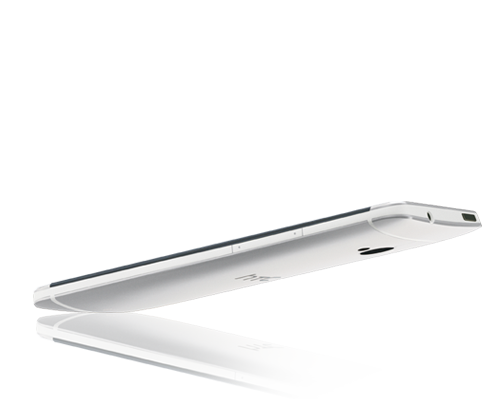
Size: 137.4 x 68.2 x 9.3mm
Weight: 143g
Display: 4.7 inch, Full HD 1080p, 468 PPI
Design
 HTC put in a lot of effort to make this device look amazing - efforts which have been a great success. However, design was never a weak point of HTC devices. As far back as I remember, HTC devices were always one step ahead of the competition when it came to the design and form innovation. So for me, it is not a surprise that HTC One sets a new standard of build quality and design.
 Gaps
However, some users are reporting a wide gap between its plastic and metal surfaces. I dont have any on mine, but as far as I know this problem is not a matter of just few devices. So right after you buy yours, make sure it doesnt have any gaps. Is it something that should stop you from buying HTC One? Surely not. It is normal in every production process that sometimes there are some manufacturing issues. On the other hand, it seems that HTC quality testing department is not working very well, if units with gaps are passing build flaw tests. HTC One is a premium device for a premium price, so as a customer, you have a right to expect a gap free product (especially since HTC advertised the device as "gap free"). If you have noticed any, go to the store where you bought your device and exchange it for a gap free unit.
Made from one piece of aluminium
 HTC One is known to be made from aluminium with a unibody construction. You can have a silver model or a black one at the moment (more colours are rumoured to be on the way). I can tell you that both look amazing. The black device looks to be more solid, but silver gives you a better, more premium look and feel. Not much to discuss when it comes to colours, because its a matter of a taste of each user. If you want to read more about the process of designing the HTC One, you can visit this blog - Metal-morphosis of the New HTC One and this one - Making the New HTC One.
No removable battery - no problem
The unibody design has some particular consequences. First of all, you cant remove or change the battery inside the HTC One. Is it an issue? Personally, I never found it to be a problem. There are methods to switch off the device completely without removing the battery - a combination of power + volume buttons. Also, I shared my thoughts on this topic here - Removable battery - do we really need it? Its been a while already since the HTC One has been on the market and its a best-selling product, despite its non-removable battery. Does this mean a removable battery is not that important in the end?
Of course I understand some arguments against having a non-removable battery. But there are always two sides of an argument and Im not here to judge which side is better. Personally I just prefer unibody design, mostly because I see no reason to replace or remove the battery inside the device.

No micro-SD card - no problem either
It seems that no micro-SD card slot is also a consequence of having such a design. However, I can imagine that a micro-SD card could be used the same way as micro-SIM card is and it wont make it impossible to have a unibody design. On the other hand I also dont find any reasonable arguments to have a micro-SD card. The vast majority of users dont need more then 32 GB of available space. If you want to know more details about Android and internal memory you can read my article here - Virtual SD card on Android. HTC One is not supposed to be your personal media storage - for that you should buy a mini-PC with an mATX motherboard and 2x2TB HDDs connected with RAID. If the internal storage on your HTC One is full, backup some pictures or music onto your PC (or use USB OTG).
What to improve
Is there room for some improvements? Yes, I think there is. First of all, the design of the hardware buttons is not really comfortable. Having the power button on the top of such big device is not the best solution. Also, the power button itself is too small and it doesnt protrude enough from the surface, so its quite hard sometimes to press it. Maybe its because of the IR sensor built into the button that they were stuck with this design. I believe that having a power button located on the right hand side of the device (like on Nexus devices) and volume buttons on the left hand side would be a much better solution.

Secondly, the build of the front speaker grilles. These tiny holes can get clogged very easily. I cant think of an alternate solution at the moment; I guess its just the downside of having a smartphone with amazing sound capabilities, known as HTC BoomSound™.
The last biggest design flaw I found are capacitive buttons. There are just 2 buttons - home and back button. It is already confirmed that under the HTC logo there is a touch sensor as well, and with the new "logo2menu" feature available in most custom kernels for HTC One it is possible to assign the HTC logo as a menu button. I think that the trend to have fewer buttons on smartphones comes from Apple - but iOS is a completely different operating system with a much simpler UI, and its quite impossible to make the Android user experience that simple. Having just 2 capacitive buttons brings some negative consequences, for instance there is significant confusion about different "long-press" and "double-tap" combinations. For example, to activate the menu function you need to long press the Home button. To display "Recent Applications" you need to quickly tap twice on the Home button. Wouldnt it be easier for the end users to have 3 buttons instead of just 2, where one of them can be used in 3 different ways?
- 1 tap = home
- 2 tap = recent apps
- long tap = menu

Im writing this review using Android 4.2.2 on my HTC One. On Android 4.1.2 it was less complicated, but somehow worse, because without the possibility to assign a long tap on the home button as "menu", you would have to deal with an ugly black "action overflow" button at the bottom of the display, the result of application developers failing to implement the appropriate Android SDK (level 11 or higher). Such a button takes about 10% of the Lcd space and in some cases it does absolutely nothing. You can disable it by proper system modification (qemu.hw.mainkeys=1) but then you wouldnt be able to access the apps settings if the particular app doesnt support Android SDK level 11+. You can read more about Googles approach to the issue here - Say Goodbye to the Menu Button.
I believe that the perfect combination of capacitive buttons would be following:
 - Back button
---> short press = back
---> long press = kill recent app
- Home button
- Menu button
---> short press = home
---> long press = recent apps
- 1 tap = home
- 2 tap = recent apps
- long tap = menu

Im writing this review using Android 4.2.2 on my HTC One. On Android 4.1.2 it was less complicated, but somehow worse, because without the possibility to assign a long tap on the home button as "menu", you would have to deal with an ugly black "action overflow" button at the bottom of the display, the result of application developers failing to implement the appropriate Android SDK (level 11 or higher). Such a button takes about 10% of the Lcd space and in some cases it does absolutely nothing. You can disable it by proper system modification (qemu.hw.mainkeys=1) but then you wouldnt be able to access the apps settings if the particular app doesnt support Android SDK level 11+. You can read more about Googles approach to the issue here - Say Goodbye to the Menu Button.
I believe that the perfect combination of capacitive buttons would be following:
 - Back button
---> short press = back
---> long press = kill recent app
- Home button
- Menu button
---> short press = home
---> long press = recent apps
Shiny edges
 Coming back to overall design, I forgot to mention that I really like the shining aluminium edges of the One. Its much more visible on the silver version, which is also known to be less susceptible to fingerprints. This is a really awesome effect, and there is no phone on the market that looks as good as the HTC One. Say no to plastic!
Heat dissipation
Apart from premium looks, the aluminium unibody brings one more very important feature. It works as a natural, huge radiator, taking out heat from inside your device. I can definitely tell that the HTC One is running much cooler than the HTC One X or One X+. The included "System on a Chip" is part of the reason, but the aluminium body helps a lot in dissipating any heat that does build up.

Camera
Camera housing is flat in HTC One, and its very good move from HTC. In HTC One X/X+ camera housing protrudes from the phone body and it was very easy to scratch it. It seems that HTC took seriously users feedback in that matter.
Verdict
There is a lot of marketing effort behind the HTC One, but this time its one of those rare occasions where advertising doesnt lie. The HTC One is a premium product, with unique and completely amazing design. If youre looking for a smartphone that will gain people attention on the street, the HTC One fits perfectly. But design is not all - it also has great hardware inside, but this is a material for part 2 of this review, coming in a few days!
PS. I want thank to Tom Kelsall, my HTC Elevate companion for his help in a proper grammar redaction of the review! Thanks Tom!

Design summarize:
+ overall design
+ aluminium unibody construction
+ it feels really great in the hand
+ available in two great looking colours
+ two sound grids for best multimedia experience
+ aluminium unibody construction
+ it feels really great in the hand
+ available in two great looking colours
+ two sound grids for best multimedia experience
- gaps on some units
- only 2 capacitive buttons
- hardware buttons location
Subscribe to:
Posts (Atom)
